SCHOLARSHIPS & AWARDS

Articles

‘It’s our job to do this’: South Africa to lead the global challenge to decode the enigmas of fungi
UP professor launches novel research into little-understood, vital branch of mycology


Research Report



Featured
Life as we know it would not exist without fungi: no decomposition of organic materials and creation of essential plant nutrients, a lot less mitigation of man-made carbon, no leavened bread (or beer), even lifesaving medicines, among many other things. Yet we know so little about them.
Although the number of fungal species is thought to number in the millions and they fundamentally impact every aspect of humanity, only a fraction have been described – and even so, we don’t know what most of them do.
South Africa, with its incredible plant biodiversity (that in turn is partly used to estimate the number of fungal species), is considered one of the world’s fungal hotspots, with an estimated 2.5-million species worldwide, 200 000 estimated for South Africa; by comparison, only around 155 000 have been described worldwide. Cryptococcus, one of the most dangerous fungal pathogens known to humanity, is also believed to have originated in Southern Africa.
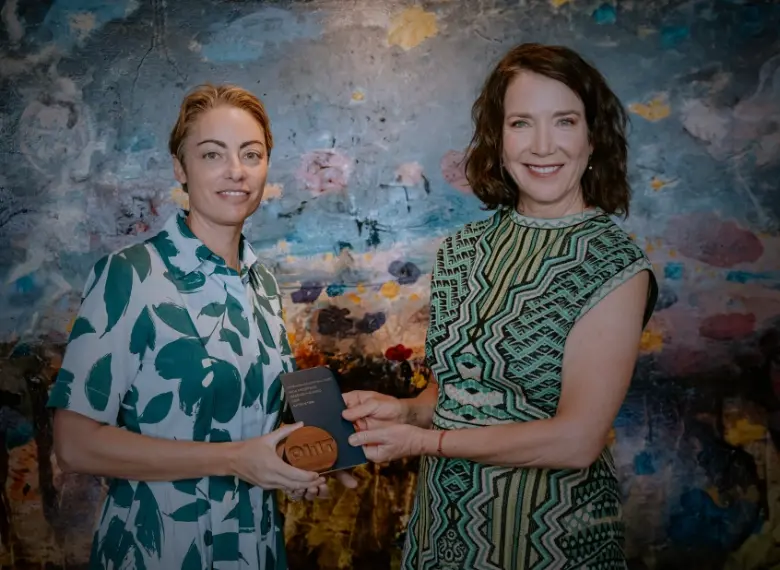
This is why the Oppenheimer Memorial Trust (OMT) has awarded its New Frontiers Research Award for 2026 to mycologist Professor Cobus Visagie, an associate professor at the Forestry and Agriculture Biotechnology Institute (FABI), which is linked to the Department of Biochemistry, Genetics and Microbiology at the University of Pretoria: to find, identify, name and catalogue fungi, creating resources that can be used by researchers the world over to benefit humanity in myriad ways.
By growing global knowledge of fungi, scientists will, for example, have the opportunity to develop novel chemistry (including new medicines to fight illnesses and/or cancer); bolster agriculture through biocontrol, reducing reliance on pesticides and fertilisers; create sustainable foods such as myco-proteins, as an alternative for livestock farming; and develop eco-friendly materials for clothing and packaging.
Visagie, who had initially considered a career in the microbiology of beer brewing before becoming fascinated with fungi while he was a student, says both South Africa’s global importance in terms of its fungal biodiversity and international technological advances – which he intends to harness – mean that the time is right for the country to take the lead in studying fungi.
“We’re on the cusp of technological changes that allow biodiversity discovery to be quicker and more effective. If we don’t use this opportunity now, then South Africa and Africa will be left behind. It’s our job to do this,” he states. “It’s the perfect time for South Africa to record its own biodiversity – and in turn make a huge contribution to international biodiversity knowledge.”
Visagie’s New Frontiers Research Award entails a R1.5-million research grant per annum over five years, for a total of R7.5-million. He will use this support to fund a project called Mapping Unseen Fungi Across South Africa (MUFASA), which will seek to find, culture, describe, name and whole genome sequence hundreds of novel fungal species, providing science with a vital new resource.
“One of the big outcomes of this project will be the building of a culture collection with the species from South Africa, because if we don't have those strains, we cannot study them and take research into fungi and its benefits forward,” says Visagie.
MUFASA will also link with two other projects for which FABI has funding: a Horizon Europe Marie Skłodowska-Curie Actions (MSCA) staff exchange grant with the European Union, which explores how fungi can be utilised to benefit our bioeconomies, and a Wellcome Trust-funded “CryptoADAPT” project that focuses on Cryptococcus, which is probably the most important fungal pathogen across the world.
In addition, FABI’s research is in forestry and agriculture, and fungi have the potential to harness biocontrol rather than chemicals to control pests and diseases, as well as to reduce the use of fertilisers such as phosphates, leading to healthier soils and a greater focus on conservation agriculture.
OMT instituted the New Frontiers Research Award in 2024 in response to a need to bolster South Africa’s global reputation for research excellence, and attract and retain early- to mid-career researchers who will build diverse, high-performance research teams, foster collaboration and strengthen the South African academy. It aims to give exceptionally talented researchers the freedom and flexibility to pursue bold ideas, and push the boundaries of knowledge.
Says OMT chairperson Rebecca Oppenheimer, “Professor Visagie’s work has the potential to positively impact a dazzling array of matters that impact humanity, from health to cleaner agriculture, and to environmental sustainability and addressing climate change.
“South Africa’s unique advantage is that we are home to one of the most biodiverse plant kingdoms in the world. Given this natural endowment, the research that he and his colleagues are doing is not simply a nice-to-have; it’s a must-have.
“We’re exceptionally proud to support work like this, which holds enormous promise for a better world and brighter future, and which will place South African academia front and centre on the global stage.”
The University of Pretoria’s Vice-Principal for Research, Innovation and Postgraduate Education, Professor Sunil Maharaj, says the funding received from the Oppenheimer Memorial Trust is set to amplify the impact of Visagie’s research. “All the elements are in place,” he says. “The incredible natural diversity we have in South Africa, the exceptional expertise in mycology of Professor Visagie, his colleagues in FABI and his international collaborators, emerging technologies that will greatly enhance the reach and accessibility of the research, and, now, the funding from OMT.
“As the University of Pretoria, we are exceedingly pleased with the recognition that Professor Visagie’s important work is receiving. We are confident that the MUFASA project will gain valuable global exposure thanks to this prestigious award.”
MUFASA’s approach will be novel, combining the long-standing scientific approaches of culturing (growing fungi in the laboratory), morphology (studying the form and structure of fungi), DNA-barcoding (for their identification) and taxonomy (naming, describing and classifying fungi) with new technologies such as metabarcoding (a high-throughput sequencing technique) to simultaneously identify all species within a single sample using bioinformatics (a field that merges biology with computer science, statistics and mathematics to analyse and interpret large-scale biological data).
Visagie and his team at FABI will not be alone in their quest, however. MUFASA is partnering with academics from all over the world, including the US, UK, Denmark, Germany, Canada, the Netherlands and the Czech Republic. “One person cannot run the network alone. We need a team to make this work,” he says.
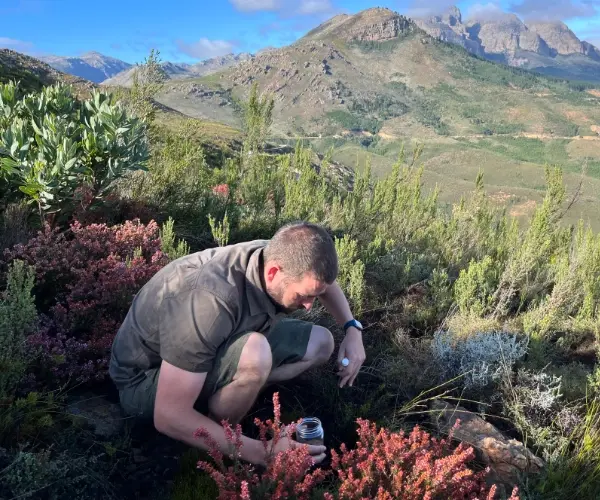
Coupled with its own collection of samples, primarily from leaf litter and soil, MUFASA is also incorporating a citizen science approach to both maximise its fieldwork – the collection of samples – and create greater awareness of fungi and other microbes. It will collaborate with mycologists in all nine provinces, who will approach schools and get learners to also collect samples. Any new fungal species will be named after the learners who collected them.
“It’s a fact that we have only scratched the surface when it comes to the world of fungi, and of the comparatively few we have identified, we have no idea what most of them do. Imagine the potential that sits out there. MUFASA’s objective is to build a resource so that we can begin understanding them and harnessing them or, in the case of pathogens, combating them,” says Visagie.
“The funding that we’re getting from the Oppenheimer Memorial Trust is incredible. I’m so happy that this is happening, and happening with OMT. The prestige that goes with that is immense.”
Research Report


Featured
+27 (0)11 551 9500
Ground Floor
The Reserve
54 Melville Road
Illovo, 2196
Johannesburg
South Africa
Our Focus Areas

.png)
© 2023 The Oppenheimer Memorial Trust
Terms of Service | POPIA