SCHOLARSHIPS & AWARDS

Articles

Prof Mark Solms aims to uncover the mystery of consciousness using artificial intelligence.


Research Report




Featured
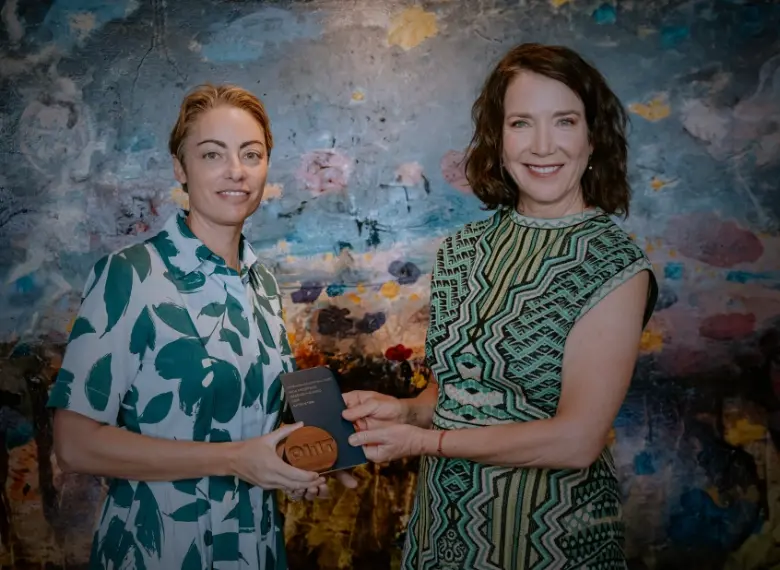
The University of Cape Town (UCT) Neuroscience Institute’s Professor Mark Solms has been awarded a prestigious Oppenheimer Memorial Trust grant of R1.9 million that will enable a new line of inquiry into proof-of-concept research endeavours that seek to understand how and why consciousness works by using an artificial agent.
This catalytic grant awarded by the Oppenheimer Memorial Trust, a charitable organisation that is deeply committed to education in South Africa and has a long history of supporting UCT research programmes, will support an exciting new research avenue into consciousness and artificial intelligence (AI). Funding of this nature allows for high-risk, high-reward research that is often passed up in favour of research that meets immediate needs or is disease focused. But this research has the potential to yield answers about what it fundamentally means to be human.
“We are extremely grateful to organisations such as the Oppenheimer Memorial Trust that empower our blue-sky research aspirations through such generous philanthropic funding.”
Professor Solms is the director of Neuropsychology at UCT’s Neuroscience Institute. He is internationally recognised for his pioneering work in the fields of neuropsychology and affective neuroscience; and is best known for identifying the brain mechanisms of dreaming and for integrating psychoanalytic insights with modern neuroscience. A recipient of the pre-eminent Harry Oppenheimer Fellowship and Medal, Solms has spent his entire career investigating the mysteries of consciousness. Discovering how subjective feelings arise from physical processes has been a lifetime’s quest.
The matter of consciousness
Consciousness – the inner, subjective experience of the mind – is central to our daily lives. We all have consciousness, yet how and why it arises remains one of the most intriguing questions in science. The search for the brain activity that underlies consciousness – known as the neural correlate of consciousness – has recently shifted focus from cortical structures and cognitive functions such as perception, learning, memory and language to brainstem structures and affective functions such as emotion, feeling and mood. This follows the novel hypothesis of Solms & Panksepp that the foundation of consciousness is brainstem arousal and modulation of cortical perception and action selection, and not the cortical functions themselves. Simply put, subjective feelings are the values that enable us to make voluntary choices that maintain physiological stability, otherwise known as homeostasis. Since the function of homeostasis was previously reduced to a series of algorithms, Solms & Friston reduced the extended homeostatic function of feeling to a further series of algorithms that can now be practically implemented, developed, challenged and studied in an artificial agent.
Cracking the code
A team of scientists, led by Solms, will endeavour to crack the code of consciousness through its replication and simulation in an artificial agent. Drawing on the team’s diverse expertise in neuropsychology, cognitive neuroscience, computational neuroscience, physics, applied mathematics, AI and robotics, the goal is to design and evolve an artificial agent equipped with three conflicting categories of need, upon which its existence depends. These are the need to find energy resources; the need to avoid structural damage; and the need to recuperate through rest. The agent must learn to meet these needs by trial and error, followed by counterfactual planning, in changing, uncertain and progressively complex environments.
“The question as to how physical processes cause subjective experience isn’t called ‘the hard problem’ for nothing, but what question could be more interesting? Considering that subjective experience exists, that it clearly is part of nature, the question must be answerable by ordinary natural-scientific means,” said Solms.
This research should yield fundamental new insights into the functional architecture of affective consciousness at a mechanistic level, and in doing so, it may provide new understandings of cognition and subjective experience. Certainly, “a revelatory new theory that returns emotions to the centre of mental life”.
This article originally appeared on www.news.uct.ac.za.
Authors: Jacqueline Bracher and Hayley Tomes
Research Report


Featured
+27 (0)11 551 9500
Ground Floor
The Reserve
54 Melville Road
Illovo, 2196
Johannesburg
South Africa
Our Focus Areas

.png)
© 2023 The Oppenheimer Memorial Trust
Terms of Service | POPIA